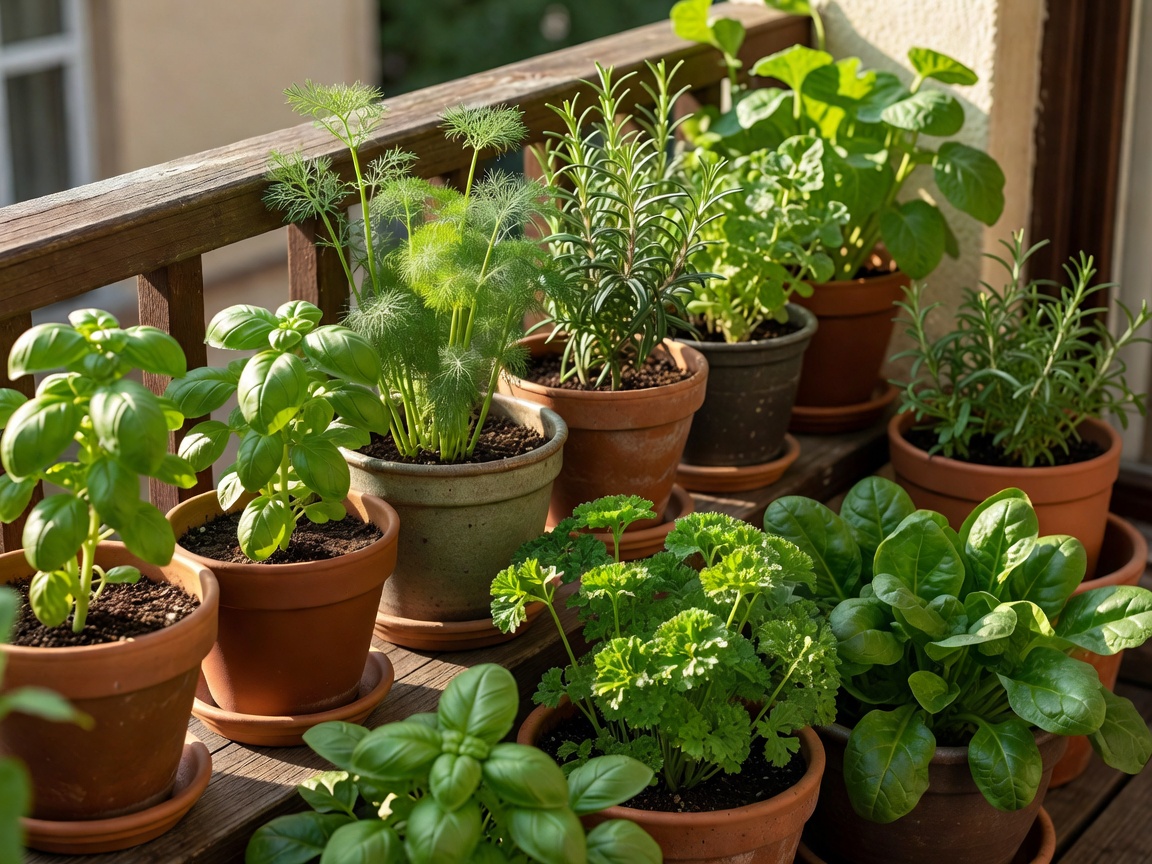
Map light before selecting crops
Observe direct sun over several days and note shade from neighbouring buildings, balcony slabs and railings. Light changes with season and weather. South-facing is not a guarantee of suitable conditions if a wall reflects intense heat; north-facing does not mean every point is permanently dark. Use plant labels and reliable species guidance for the crop you choose. Place the most light-demanding options in the brightest suitable position and reserve lower-light zones for plants that tolerate them.
Wind and rain change watering needs. A sheltered corner may retain moisture; an exposed ledge can dry a pot quickly. Keep food plants reachable for inspection, watering and harvest. Use clean, food-suitable containers and growing media. Ensure drainage works without causing nuisance runoff.
Herbs: group by growth and moisture
Basil generally prefers warmth, light and regular moisture, while avoiding persistently waterlogged roots. Parsley can suit a range of container setups when it receives suitable light and consistent care. Thyme often fits a brighter, better-drained position. Chives grow well in a dedicated pot or a compatible herb group. Mint spreads vigorously; give it its own container to prevent it dominating neighbouring herbs.
Grouping all herbs into one box looks tidy, but different moisture preferences can complicate care. Separate plants with contrasting needs. A useful arrangement is a bright, well-drained pot for thyme; an individual container for mint; and a trough for compatible leafy herbs where there is adequate root space. Check specific plant requirements before combining them.
Greens, strawberries and compact vegetables
Salad greens can be useful in troughs when planting depth, spacing and light suit the selected variety. Sow or plant in stages if you want a succession rather than one crowded container. Harvest in a way that allows the plant to continue growing where appropriate, following guidance for the crop. Do not assume all greens tolerate the same heat or sun; some need protection in hot conditions.
Strawberries can grow in pots or troughs with enough root volume and accessible fruit. Keep containers where watering and picking are easy. Compact vegetables may suit a balcony when their mature size, support needs and light requirements fit the available area. Review the seed or plant label for spacing, maturity and suitable conditions. A crop that needs more root depth or sustained sun may not be a good match for every apartment balcony.
Edible flowers add a small planting layer, but confirm that the species is edible and that it has not been treated with unsuitable chemicals. Never identify a flower as edible from appearance alone. Container fruit can be possible where the selected plant and pot size fit; consider pollination requirements, eventual size and overwintering needs before choosing.
Containers, spacing and watering
Choose a container around mature root needs, not the seedling’s current size. Check depth, width, drainage and filled weight. Troughs make efficient use of narrow edges; individual pots separate watering regimes and allow easy rearrangement. Do not overcrowd plants to maximize apparent yield. Airflow, access for harvest and room for mature foliage all matter.
Water when the crop and growing medium need it. Frequency varies with weather, exposure, container size, plant stage and rainfall. Check moisture in the root zone rather than watering by a universal schedule. Small pots in wind and heat may dry quickly. In cool or rainy periods, reduce watering when appropriate and make sure drainage remains clear.
Feed only as suitable for the crop and growing medium, and follow product instructions. Avoid unsupported yield promises. Results depend on light, variety, container volume, care and local weather.
Harvest and rotate
Harvest regularly where the plant responds well, using clean tools or hands. Avoid removing more foliage than the plant can replace. Remove damaged leaves and monitor for pests. After a crop finishes, refresh the container according to the next plant’s needs rather than automatically reusing depleted media. Rotate crops seasonally where practical. Keep a simple note of sowing dates, light changes and watering issues; that record improves next season’s choices.
Good for
People who cook with fresh herbs, have a sunny or partly sunny balcony, or want to grow a small selection of greens and seasonal crops close to the kitchen.
What to know
Plant performance varies by species and microclimate. Check crop-specific light, spacing and container guidance. Keep edible plants away from contamination sources, follow local safe-growing advice and do not consume unidentified plants.
Related field guides
Need a practical starting point?
Send a question about edible planting and balcony conditions.
Contact the atlas