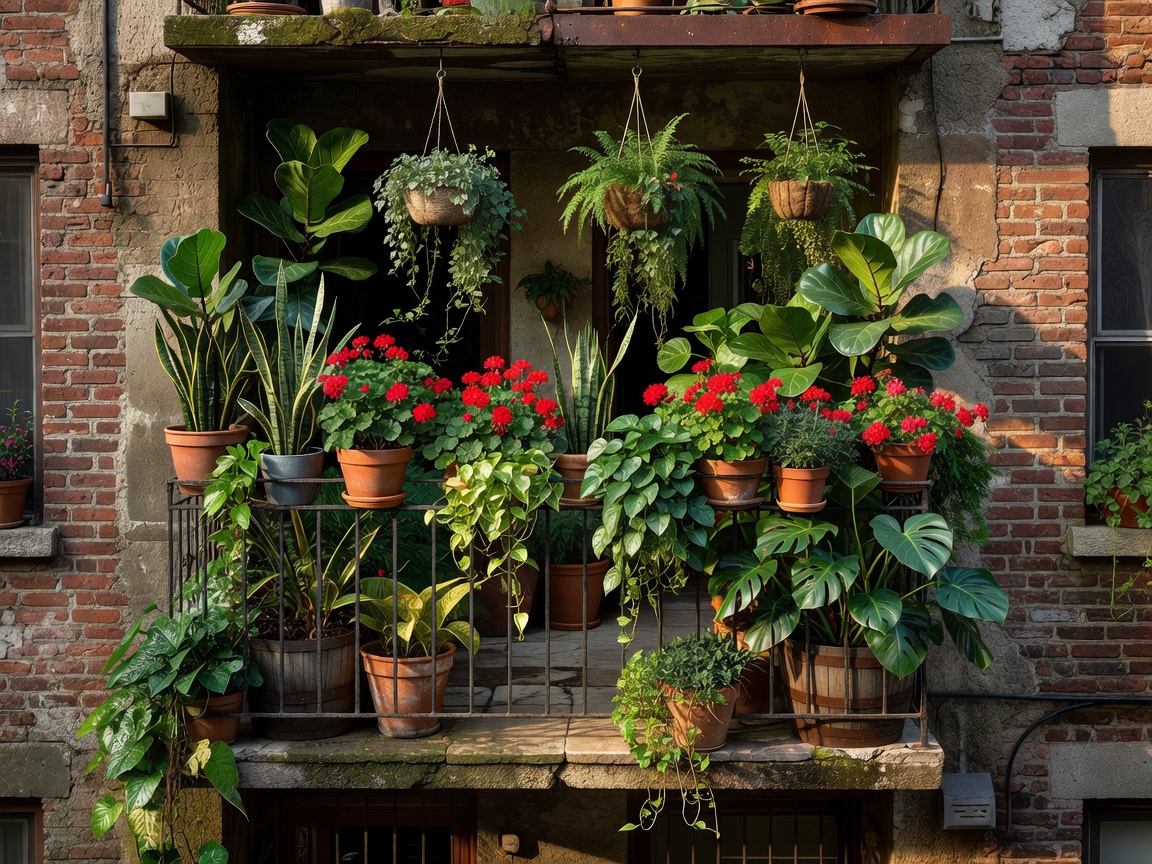
Start with conditions, not a regional stereotype
“European balcony garden” covers very different situations. A sheltered courtyard in a mild coastal district does not behave like an exposed upper-floor balcony in a colder inland city. Record the balcony’s orientation, hours of direct sun, typical wind exposure, rain reach and sheltered corners. Note reflected heat from walls and whether overhead floors limit rainfall. These observations guide plant choice, container material and maintenance more reliably than a broad regional mood.
Architecture also sets practical limits. Deep masonry reveals may offer shade; metal railings may increase wind exposure; narrow balconies require careful circulation. Check permission before attaching boxes or screens to a railing. Ask the building owner or manager about restrictions and safe loading rather than assuming a balcony can support a particular arrangement.
Mediterranean-influenced balconies
In warmer, brighter locations, design for heat and drying wind. Terracotta can suit the visual context and its porous walls can dry faster than less permeable materials. That means moisture may need closer monitoring. Choose containers with drainage and a stable growing medium suited to the selected plants. Herbs such as thyme may fit a sunny position; basil generally benefits from warmth and consistent moisture. Afternoon shade can reduce stress where reflected heat is strong.
Advantage: bright exposure can support a broad range of sun-loving herbs and flowers. Limit: hot walls, wind and small pots can dry quickly. Do not treat every southern-facing balcony as identical; altitude, coastal air, building shade and seasonal conditions change the picture.
Northern and Atlantic approaches
Cooler or cloudier sites often call for flexible planting, rain-aware drainage and attention to wind. A light balcony may still receive useful daylight without long direct-sun periods. Select plants by their actual light requirements, then place them in the brightest workable zone. Atlantic-facing locations may experience frequent rain and gusts; protect vulnerable plants through siting and grouping rather than creating an unsecured screen.
Containers that resist weather and have unobstructed drainage can be easier to manage through wet periods. Timber can soften hard architectural lines but needs suitable construction and maintenance. Plastic or composite containers may be lighter, though quality, insulation and finish vary. Compare actual dimensions, drainage design and handling needs; do not infer performance from material alone.
Alpine-influenced and Central European spaces
In areas with larger temperature swings, frost exposure and strong sun can coexist. Use durable containers appropriate to expected conditions and avoid leaving water trapped in a pot through freezing periods. A sheltered position may help overwintering, but it can also reduce light. Central European apartment balconies vary from enclosed courtyards to windy upper levels. Use building orientation, nearby walls and seasonal shade as the guide, not a single regional template.
Alpine-inspired planting can use restrained forms, stone-like finishes and compact plants selected for the actual balcony conditions. Keep the composition functional: containers must remain reachable, drainage must not affect neighbours and stored items must not obstruct exits.
Choose a style by selection criteria
Use this order: exposure, wind, rainfall, available floor area, container weight and maintenance time. Then select a material palette. Terracotta and natural stone can add warm mineral tones. Timber introduces texture. Metal offers a precise architectural edge but can heat or cool quickly depending on exposure and construction. Dark finishes absorb more solar energy than pale ones. These are tendencies, not guarantees; placement and product build matter.
For a usable example, map a sunny wall, a shaded doorway and the strongest wind edge. Put a drought-tolerant herb group in the brighter position, keep moisture-sensitive plants where they can be checked easily, and leave the door approach clear. Repeat one or two container finishes to establish visual order without forcing a regional theme.
Good for
Renters and owners comparing planting approaches across climates; anyone adapting a visual reference to a real balcony; and people choosing materials before buying containers.
What to know
Climate labels never replace local observation. Plants, containers and fixings have different needs. Verify building rules, balcony capacity and any railing attachments with the property manager or a qualified professional. Do not block drains, doors or shared access.
Related field guides
Need a practical starting point?
Send a question about balcony conditions or planning priorities.
Contact the atlas