Size for roots, not appearance
Start with the mature plant and the space its roots need. A small decorative pot may dry rapidly and restrict root growth. A larger volume can buffer moisture changes, but it takes more room and can be heavier when filled and wet. Check plant-specific recommendations and the container’s internal dimensions. Depth matters for root-forming crops; width matters when several plants share a trough. There is no universal pot diameter that suits every species.
Before filling anything, map doors, drains, railings and the walking route. Then check balcony rules and capacity with the owner, property manager, engineer or relevant authority where applicable. Do not rely on a generic load estimate. Water-saturated media, containers and stored items all contribute weight.
Compare four container arrangements
Individual pots
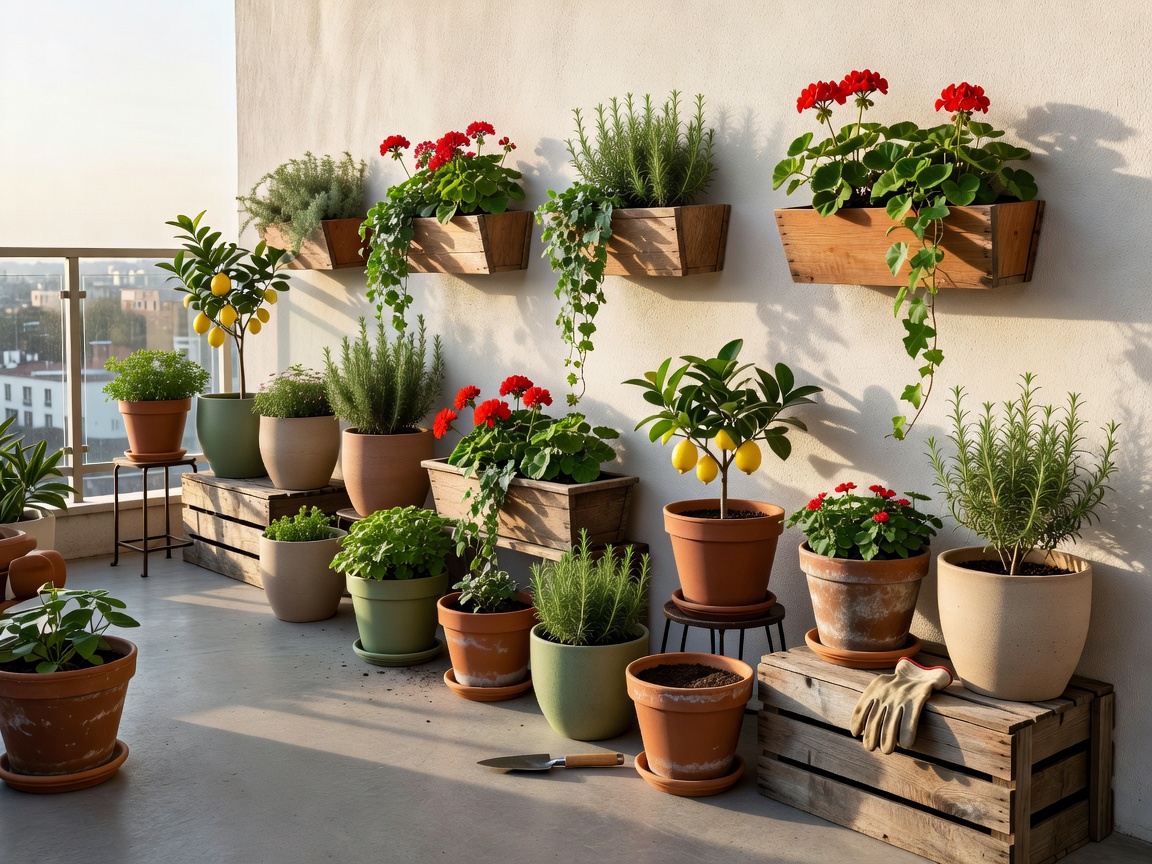
Separate pots make it easy to group plants by watering needs, move a single plant and adjust the layout. They fit awkward corners and let you mix sizes. Their limits are gaps between containers, repeated watering checks and a tendency to spread across the floor. Use a tray only where it will not leave roots standing in excess water or cause runoff problems.
Long troughs
Troughs make efficient use of a narrow edge and create a continuous visual line. They can suit herbs, low flowers and compatible shallow-rooted crops. Plant spacing still matters: crowding increases competition and makes inspection harder. One trough also ties plants to a shared moisture regime, so pair species with similar needs.
Modular planters
Modules can be rearranged and expanded in stages. Confirm how modules connect, drain and remain stable. A modular system is useful when the balcony changes by season or when a renter needs a movable setup. More joints mean more places to inspect for blocked drainage or movement.
Vertical arrangements
Wall-mounted pockets, freestanding ladders and stacked containers free some floor area. Their advantages depend on secure installation, light access and reliable watering. Upper tiers can dry faster and shade lower plants. Freestanding systems still occupy a footprint; fixed systems require permission and appropriate professional advice. Keep the structure clear of doors and shared access.
Drainage and growing media
Use containers with functional drainage suited to the plant. Prevent outlets from being blocked by compacted media, and consider where excess water will go. Do not direct runoff onto neighbours or building surfaces. Growing media should be appropriate for the crop and container, with enough structure to hold moisture while allowing air and drainage. Garden soil can be dense in pots and may not suit the intended use. Follow the media’s instructions and the plant’s requirements.
Lightweight containers and media can ease handling, but “lightweight” is not a substitute for checking the overall filled weight and site rules. Terracotta is heavy and may dry more quickly through porous walls. Metal, timber, plastic and composite containers vary in heat retention, durability and drainage details. Inspect construction rather than choosing by material name alone.
Group, space and water access
Group containers by sunlight and watering needs. Leave enough separation to reach leaves, inspect pests, prune and water without moving every pot. Arrange taller plants where they do not block daylight to lower plants or compromise a neighbour’s view. Make the tap, watering can and drain reachable. If you use a hose, plan a safe route that does not cross a doorway or create a trip hazard.
Watering frequency changes with temperature, wind, container size, plant stage, growing medium and rainfall. Check moisture rather than following a fixed calendar. Smaller pots and exposed positions often need more frequent attention. During cold or wet periods, reduce watering as plant demand falls, while avoiding prolonged waterlogging.
Winter storage and seasonal changes
Before winter, identify which pots can be moved and which are too heavy or fixed. Protect vulnerable plants according to their needs and local conditions. Empty or store containers only where appropriate; check that drainage remains clear. Keep heavy objects away from edges unless placement has been assessed under the applicable building requirements. A modular arrangement makes seasonal changes easier when the modules can be safely moved.
Good for
Balconies with limited floor area, renters who need reversible arrangements, and gardeners trying to simplify watering by grouping compatible plants.
What to know
Container size and filled weight vary widely. Verify building capacity and restrictions before adding substantial weight or installing fixtures. Keep egress, drains and access clear. Select plants first, then match containers to their root, light and moisture requirements.
Related field guides
Need a practical starting point?
Send a question about container selection or balcony planning.
Contact the atlas